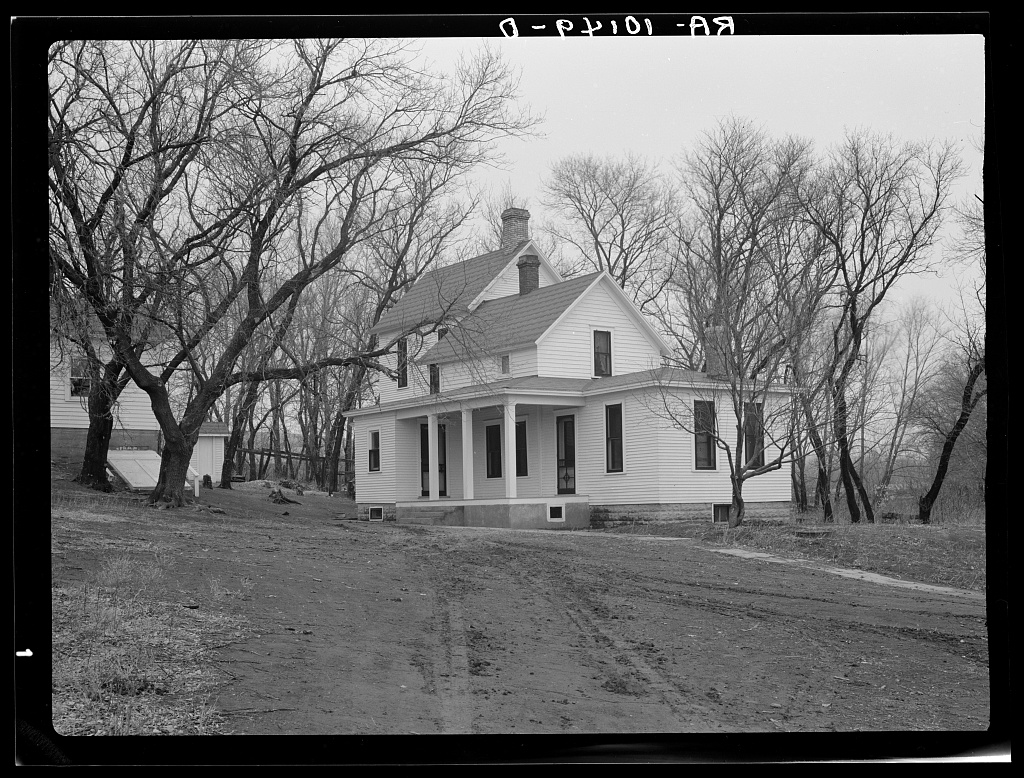
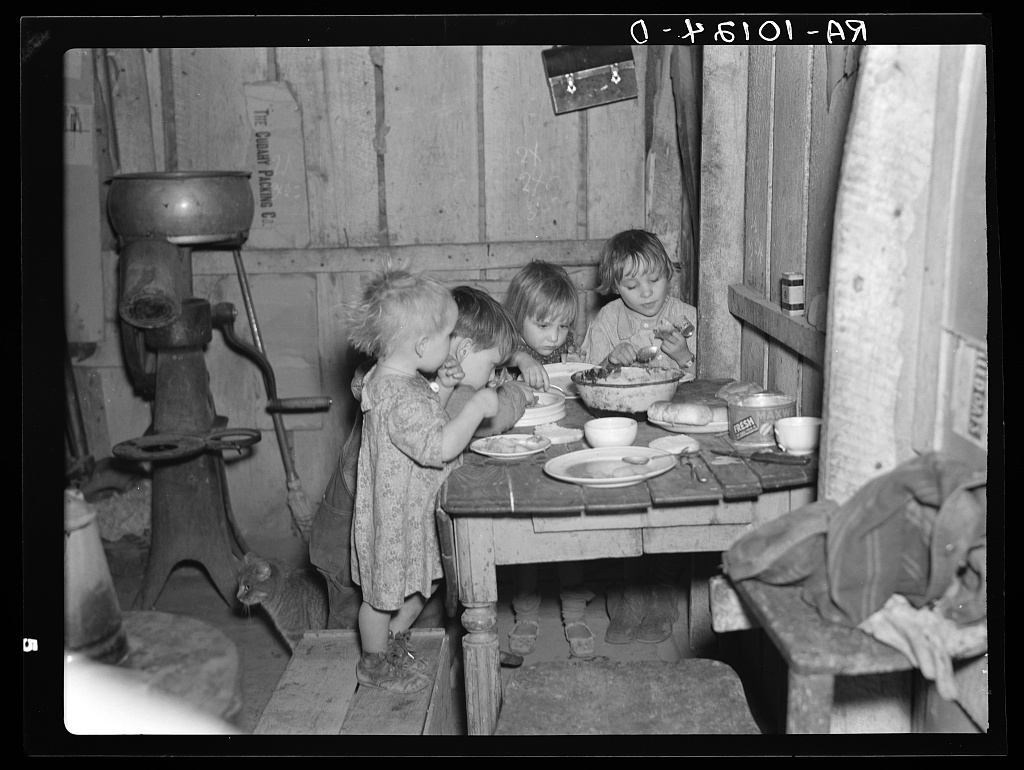
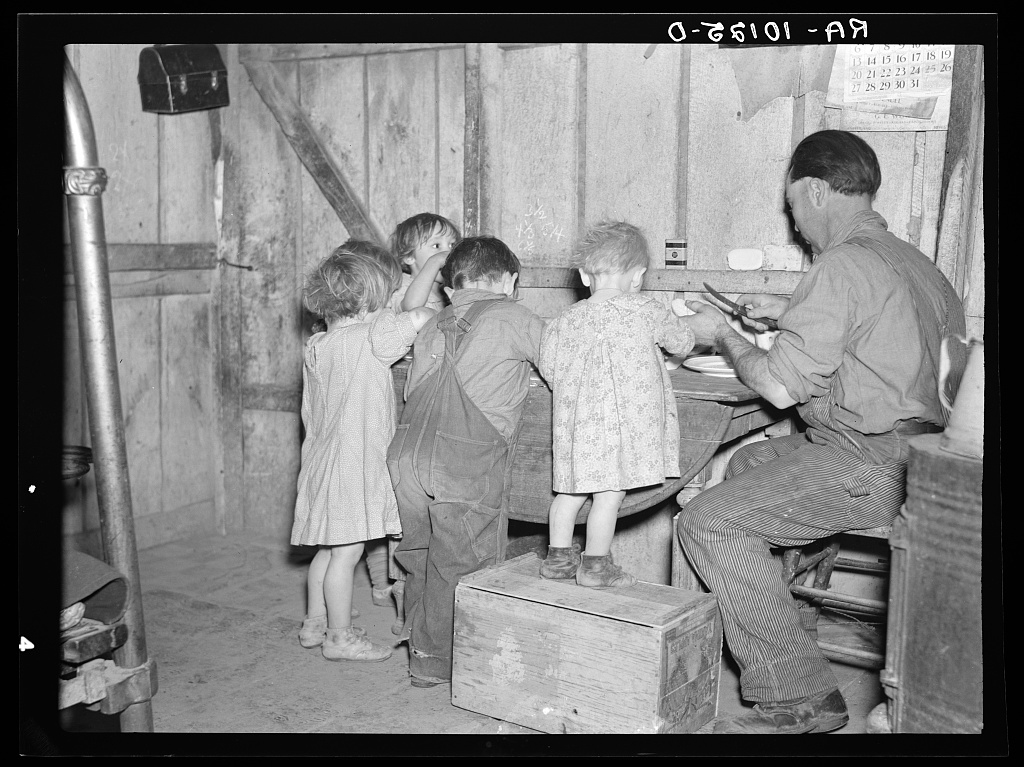
The six genealogy exhibits below are invented for this demonstration. Real projects link findings to real records. The archive photographs are credited separately.
How the generations connect
In this fictional case, James and Margaret owned the Maple Street house by June 1948 and were living there by September. The exact moving day remains unknown. James’s earlier move to Wisconsin falls between the dated 1921 and 1923 letters.
S1 · Family record
The family Bible leaf
Fictional demonstration exhibit. Ellis example packet, E-01, invented transcription: “James, son of Arthur Ellis and Rose Bennett, 14 March 1892. James and Margaret Hale, married 7 June 1924. Helen, daughter, 18 February 1926.”
A later family transcription supports the stated relationships in the demonstration. It would require comparison with original civil or church records in an actual project.
S2 · Personal correspondence
Two return addresses
Fictional demonstration exhibit. Ellis packet, E-02, two invented envelope transcriptions: James Ellis, Rockford, Illinois, 12 November 1921; James Ellis, Eau Claire, Wisconsin, 4 May 1923. The second letter says, “The bench is here at last.”
These establish two points of residence within the fictional case. They do not establish a single moving date or the reason for the move.
S3 · Property record
The Maple Street purchase
Fictional demonstration exhibit. Ellis packet, E-03, invented deed abstract dated 16 June 1948: purchasers James Ellis and Margaret Ellis; a house on Maple Street. This is a demonstration abstract, with no real parcel or registry citation.
Ownership is not proof of occupancy. No actual address is assigned to the fictional household.
S4 · Personal correspondence
Helen’s September letter
Fictional demonstration exhibit. Ellis packet, E-04, invented letter dated 5 September 1948: “Mother has the blue dishes in the new kitchen. Dad says the pantry shelf will be finished before you come.” Signed Helen.
Together with E-03, this places the household in the new home by September. It does not say when they first slept there.
S5 · Family recollection
The button tin and the low stool
Fictional demonstration exhibit. Ellis packet, E-05, invented interview excerpt attributed to Helen, 1998: “Mother saved the buttons in a tin. Dad made me a stool when I was little. By Maple Street it had been painted twice. You learned the pie by standing beside her.”
Recollection supplies the domestic details. It is not treated as independent proof of a date or occupation.
S6 · Work record
Repairs in the daybook
Fictional demonstration exhibit. Ellis packet, E-06, invented work-note excerpts: 3 April 1930, “window sash, two”; 9 April, “table leg, repair”; 21 April, “stool for H.” A fictional family memorial list gives James 1892–1968 and Margaret 1898–1986.
The work notes show tasks during April 1930 only. They do not prove continuous employment or ownership of a business.
Questions for another chapter
When did they move into the house?
Compared the deed abstract with Helen’s dated letter. Owned by 16 June; occupied by 5 September 1948.
A utility opening record or another letter could narrow the interval.
Was the stool in the daybook Helen’s?
Compared the “H.” entry with her later recollection. Consistent, but the object is not independently identified.
Ask whether it survives and photograph any marks before drawing a firmer conclusion.
Who were Margaret’s parents?
Reviewed the limited branch packet. Not answered by the supplied exhibits; outside this collection’s question.
A separately agreed extension could examine her birth family.